

























Dog and Cat Grooming Clippers: What to Look for Before You Buy?
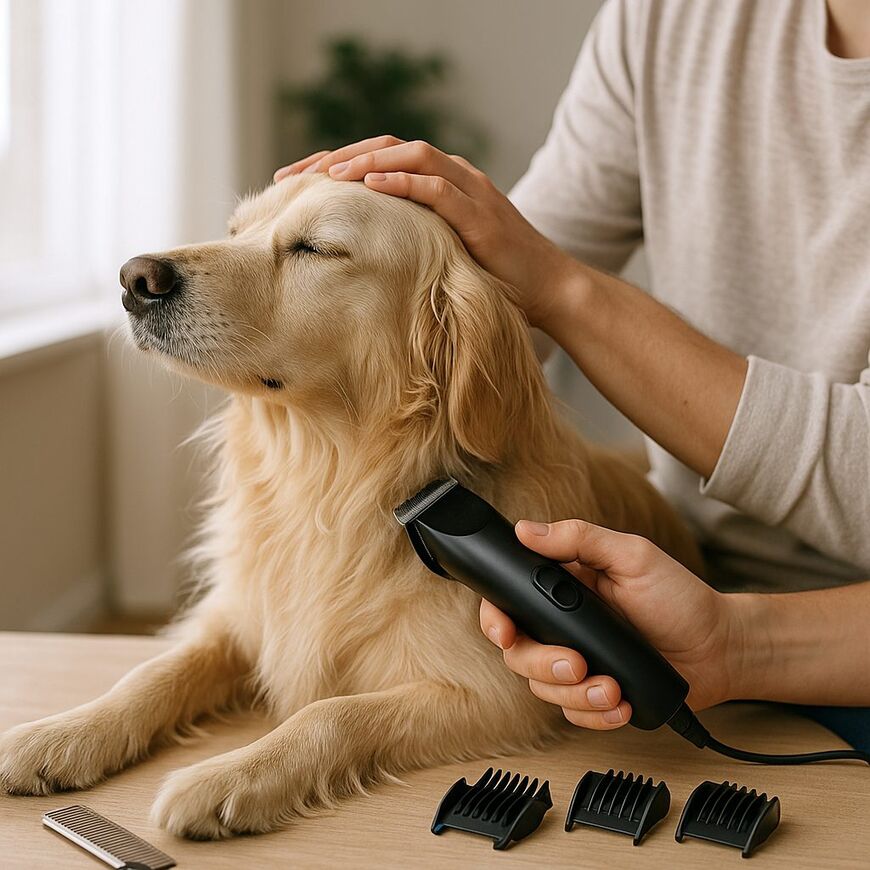
No single clipper is right for every dog or cat. The best choice depends on the coat type and condition, the area you want to groom, and how often you plan to use it. Check the available cutting lengths, make sure the blades and comb attachments are suitable for the coat, and consider how comfortable the clipper is to hold. Review the maintenance instructions, too—don’t base your decision solely on motor power or the number of speed settings.
A label that says “suitable for dogs and cats” does not guarantee that a clipper will work for every coat type or grooming task. A tangled coat or a pet that is easily startled by noise can make grooming at home difficult. In these cases, consider consulting a professional pet groomer. If there is a skin problem or a possible medical concern, consult a veterinarian.
Is Grooming at Home Right for Your Pet?
Not every dog or cat needs a haircut, and not every coat should be trimmed at home. The decision depends on the condition of the coat, the area you want to groom, and how your pet responds to noise and handling. A small touch-up may be suitable if your pet is calm and you can work carefully. A full haircut—or attempting to groom a pet that resists the clipper—could result in an injury.
Warm weather alone is not a reason to shave a dog or cat. In double-coated dogs, the undercoat helps insulate the body, while the outer coat provides protection. Shaving close removes both layers, so it is not a general solution for keeping your pet cool. Trimming does not necessarily mean shaving, and a professional may recommend a substantial trim for a specific or medical reason. Before deciding, find out what is appropriate for your pet’s coat type and condition.
Let your pet get used to the clipper gradually, and don’t start with a full haircut. If your pet becomes frightened, tries to escape, or struggles, stop—don’t force the process. If the blade gets hot, stop working and follow the manufacturer’s instructions. Do not touch the blade teeth to check the temperature.
Warning: If the skin is irritated, there is a wound or lump, or you notice any other change, consult a veterinarian before shaving the area. If there are no signs of a medical issue but you’re unsure whether a haircut is appropriate, ask a professional pet groomer to assess the coat.
Extensive or Severe Matting Requires Professional Help
You can try to gently loosen a small mat with a brush or comb, as long as your pet is calm and the skin is not being pulled. Stop if your pet seems uncomfortable or distressed. Large, dense mats or mats close to the skin are more difficult to handle: the fur can hide the skin, and clippers or scissors used close to it may cause an injury.
In these cases, consult a professional pet groomer. If the skin is irritated, there is a wound, or your pet appears to be in pain, consult a veterinarian. Never try to cut out a tight mat with scissors.
Cat Grooming Requires Special Consideration
Most cats do not need to be shaved for summer. For a long-haired cat, the decision depends on the condition of the coat and how well the cat tolerates noise and handling; trimming is not automatically necessary. If there are many mats, your cat is having difficulty grooming itself, or extensive grooming is needed, consult a professional pet groomer. If you suspect a skin problem or pain, contact a veterinarian.
Choose a Clipper Based on the Coat and Intended Use
Before choosing a clipper, decide whether you need it for a small touch-up, grooming a specific area, or clipping a larger section of the coat. Assess the coat itself: even animals of the same breed can have different coats, so breed name alone is not enough to determine which clipper or blade to choose.
Start with the result you want: how much coat do you want to leave, and where? Compare your desired length with the cutting lengths listed by the manufacturer for the blade or comb attachment you plan to use. The result may vary depending on the attachment fitted to the clipper, so check compatibility with the exact model rather than assuming any comb will fit. There is no single length that is right for every pet or every area.
Check what is included in the kit and which additional blades and combs are compatible with the clipper. The number of attachments alone does not tell you what cutting lengths they provide. If the specifications do not state the resulting cutting length or confirm that the attachments fit your exact model, ask the manufacturer or seller before buying. Don’t guess based on how an attachment looks.
For occasional use, it’s important that the clipper is comfortable to hold and easy to control when working on a small area. Make sure the attachment you need is included or available to buy separately. If your pet moves suddenly or is not calm, stop—don’t force the process.
If you plan to groom regularly or clip a large area, check whether the clipper is comfortable to hold for extended periods. Also find out how it is charged or connected to power, how long it can run continuously, and what is required to clean it and change the blades. Check whether compatible blades and attachments are readily available.
For dense coats or more complex grooming, look for clear specifications about the intended use and suitable blade. Motor power and the number of speed settings are not enough to determine whether a clipper is suitable for a particular coat. If the clipper pulls at the fur or you’re unsure how to proceed, stop and find out whether you should consult a professional.
Weight, handle design, and noise can all affect ease of use and your pet’s response. Follow the manufacturer’s instructions for breaks and blade care during grooming. If the blade gets hot, stop and let it cool as instructed. You can review the details of this pet clipper for dogs, cats, and other pets, with a coat and nail grooming kit, but the word “professional” and the kit contents alone do not mean the clipper is suitable for your pet.
Occasional Use or Regular Grooming?
For occasional touch-ups, focus on ease of use and whether the blade can be cleaned according to the manufacturer’s instructions. For regular or extended use, check the continuous running time, too. If you choose a rechargeable model, find out how long it takes to charge and whether replacement blades are available.
For example, if you only want to tidy the fur around your pet’s paws from time to time, a lightweight clipper that is easy to control may be a good choice. If you regularly groom a larger area, continuous running time and maintenance requirements become more important.
Check Cutting Lengths and Blade and Comb Compatibility
The blade cuts the fur, while the comb attachment helps maintain a consistent cutting distance. When comparing models, look for the actual length of coat left when using the blade or comb attachment you intend to use. If it’s unclear what length a particular attachment provides, ask the seller or manufacturer before buying. Don’t infer the cutting length from the number of combs or the appearance of the blade.
A shorter cut leaves less coat, but the choice should suit the grooming goal and the condition of the coat. Make sure the attachment is compatible with the exact model, and check whether replacement blades or combs are available if you need them.
- Check the specifications for the cutting lengths available with compatible blades and comb attachments.
- Make sure the attachments fit your model and that replacements are available.
- Review the manufacturer’s instructions for changing blades, cleaning, and maintenance.
Comfort, Noise, Heat, and Maintenance During Use
A comfortable grip makes the clipper easier to control, especially when grooming a small area or changing the angle of your hand. Check the weight and handle design; if possible, hold the clipper before buying it.
For a rechargeable clipper, check how long it runs on a full charge and how long it takes to recharge. This will help you determine whether it suits the grooming session you have planned. For a corded clipper, make sure the cord is long enough to let you work without pulling or getting tangled if your pet moves.
Check the manufacturer’s instructions to see whether you need to take breaks or perform any blade-care steps while grooming. Stop from time to time and carefully check whether the blade has become hot, without touching the teeth. If the blade is hot, stop and let it cool as instructed.
- Are the weight and grip comfortable and easy to control?
- For a rechargeable model, what are the run time and charging time?
- How should the blade be cleaned, and does the manufacturer require it to be oiled?
- Are compatible replacement blades or attachments available?
Cleaning instructions vary by model. Do not rinse parts with water or use cleaning products or oil unless the manufacturer says it is safe to do so.
Help Your Pet Get Used to the Clipper Gradually
Before grooming, show your pet the clipper while it is switched off and let them approach it at their own pace. Then switch it on briefly while keeping it at a distance. If your pet remains calm, you can try a brief touch in an area where they are comfortable being handled.
Stop if your pet becomes frightened, tries to move away, or has trouble calming down. You don’t have to finish grooming in one session. If you cannot work without holding your pet by force, consult a professional pet groomer. If your pet seems to be in pain or you suspect a medical issue, consult a veterinarian.
Comparing Models: What to Check Before You Buy
Choose a pet clipper based on the coat type and the grooming task you have in mind, not the number of features listed on the product page. A product page for a rechargeable pet clipper with a grooming kit may provide details about the product and its included accessories. Check the cutting lengths and confirm that the attachments are compatible with the exact model. If anything is unclear, ask for details before buying.
- Does the manufacturer state that the clipper is suitable for your type of pet and intended use?
- Does the cutting length with the compatible attachment suit the area and result you want?
- Is the clipper comfortable to hold, and is its power source suitable for how you plan to use it?
- Which blades and combs are compatible with the model, and are they available to buy?
The product name and a photo of the kit are not enough to determine whether the clipper is suitable. If the specifications do not include details about cutting length, compatibility, or blade care, check with the seller or manufacturer.


