








Durable Camping Lantern: Choosing the Right Lighting for the Outdoors
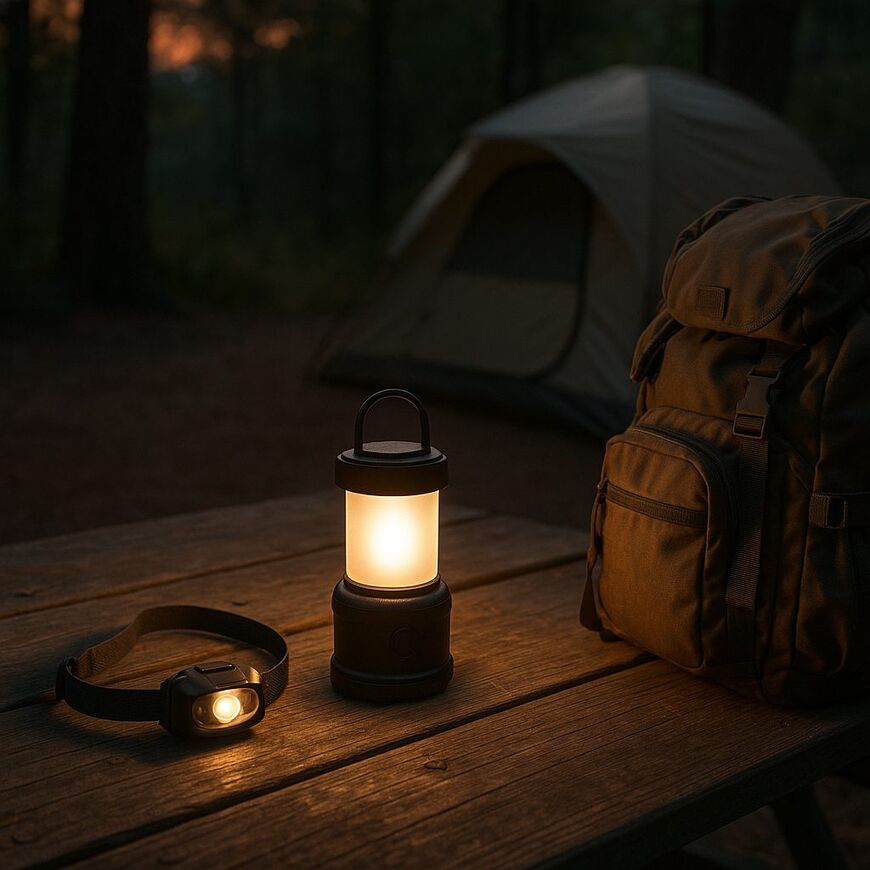
Choosing a camping lantern depends on where you plan to use it and what kind of light you need: illumination for a shared area, a focused beam for walking, or task lighting near your gear. A lantern that works well for one of these uses may not be as suitable for the others.
Before buying, check how the light is distributed, how long the lantern runs between charges or battery replacements, and how well it is protected against outdoor conditions. Choose a model based on how you plan to use it—not just its lumen rating or power source.
Start with how you plan to use it
Lighting for a tent or table should illuminate a broad area, while a forward-facing beam is more useful for walking along a trail. For tasks near your gear, such as cooking or searching through a bag, it is important to be able to position the lantern so the light reaches the area you need.
- For a tent or table: Check whether the lantern can be set down or hung, and whether its light is comfortable to use for extended periods.
- For walking in the dark: A beam that lights the path is more useful than light that spreads in every direction. You may also want a lantern that is easy to operate when your hands are busy.
- For cooking and handling gear: Look for a way to aim or position the lantern near your work area without casting a shadow over what you are doing.
When hiking, you will notice the lantern’s size and weight in your backpack. If you are car camping, you can also consider a larger model. It can sometimes be useful to bring two light sources: one to illuminate the campsite and another for personal use on the trail.
Lantern, headlamp, or flashlight
The type of light affects how you use it. A lantern illuminates the surrounding area and is suited to a table or tent. A headlamp shines where you are looking and keeps your hands free, for example, while pitching a tent. A handheld flashlight lets you direct the beam at a specific point, such as a trail or an object in the distance.
- Lantern or area light: Suitable for illuminating a space where people gather, but its broad light is less focused for walking.
- Headlamp: Convenient when you are moving around or working with both hands. It shines in the direction of your head and may not illuminate the entire table.
- Handheld flashlight: Lets you direct the light as needed. You have to hold it, so it is less suitable for tasks that require both hands.
When choosing between these types, consider whether the light will stay in one place or go with you as you move. If you need both lighting for the seating area and a focused beam for the trail, one light may not serve both purposes equally well.
Lighting inside a tent: electric or fuel-powered
An electric LED lantern does not produce combustion emissions while in use, so it is a more suitable choice for lighting inside a tent. Even so, follow the manufacturer’s instructions and keep the lantern away from fabric and flammable materials.
A fuel-powered lantern uses combustion, becomes hot, and produces combustion byproducts, including carbon monoxide, which can cause life-threatening poisoning. Do not use it inside a tent or other enclosed space. Follow the manufacturer’s instructions and fire-safety guidelines.
Check how the lantern distributes light
The lumen rating describes the total amount of light a lantern emits, but on its own it does not tell you how far the light will reach or how long the lantern will run at its highest brightness.
Light distribution affects how comfortable a lantern is to use. A broad beam is suitable for illuminating a table or the inside of a tent, while a focused beam is useful when you need to light a specific spot or see the path ahead. A powerful lantern that shines in one direction may not illuminate the entire seating area effectively.
If you will mainly use the lantern around a table, a broad, comfortable light may be more useful than maximum brightness. If you plan to move between sitting by the tent and checking the trail, look at what each lighting mode offers rather than simply counting the modes. For example, on the product page for this rechargeable camping lantern with four lighting modes and side lighting, check what each mode does to see whether it suits your planned activities.
Compare models based on light distribution and the brightness level you will actually use. Also check how long the lantern runs at that brightness, since it will usually run for less time at a higher setting than in an energy-saving mode.
Check how long the lantern will run during your planned use
Runtime indicates how long the lantern will operate before it needs to be recharged or its batteries replaced. Runtime varies depending on brightness: a higher setting uses more power, while an energy-saving mode provides lower brightness for longer.
A claim such as “up to a certain number of hours” does not tell the whole story. Check which lighting mode the runtime refers to and whether the specifications list separate figures for each brightness level. If you will mainly use the highest setting, the runtime listed for an energy-saving mode will not help you estimate how long the lantern will last on your trip.
Check whether the specifications list runtime for each mode and whether the lantern will last long enough at the brightness you plan to use. A low-battery or charging indicator can help you keep track, but it does not replace runtime information. For example, the product page for this rechargeable camping lantern with a charge indicator and four operating modes shows a battery indicator. To estimate how long it will run, also check the stated runtime and which mode it applies to.
If only the maximum runtime is listed, do not assume it also applies at high brightness. If it is unclear which mode the figure refers to, look for more details on the product page or in the manufacturer’s instructions.
Choose a power source to suit the length of your trip
For a short trip, a full charge before you leave may be enough. If you expect to spend several days without access to electricity, plan ahead for how you will recharge the lantern or replace its batteries.
- A rechargeable lantern is suitable if you can charge it before or during your trip. Check which connection it requires, how long charging takes, and how long it runs according to the manufacturer’s specifications.
- A lantern with replaceable batteries can keep working after its batteries run out. Check which battery type the model uses, and bring spares if you need a backup.
- Solar charging may be useful when sunlight is available. Check whether the lantern also has another charging option, and do not rely on sunlight as your only power source without confirming that this is suitable for the model and your trip conditions.
For a multi-day trip without electricity, a power bank or spare batteries can provide a backup, depending on the type of lantern. Not every rechargeable lantern is compatible with every power bank, so check the manufacturer’s instructions. When car camping, charging the lantern before you leave may be sufficient; make sure it is fully charged and that its runtime suits your plans. Some models can also use their battery to charge a phone, but check the specifications to see whether this feature is available and what it supports.
Check protection against water, dust, and impacts separately
The phrase “weather-resistant” does not, by itself, specify the conditions a lantern can handle. If an IP rating is listed, the first digit indicates protection against solid objects and dust, while the second indicates protection against water. The higher the digit, the greater the level of protection in that category. An X in place of a digit means no rating has been provided for that category.
The rating does not guarantee protection against every type of rain, submersion, or dust exposure, and it does not automatically indicate resistance to drops or impacts. Check the model’s specifications and the manufacturer’s instructions to see which conditions the rating covers and what the test conditions involve. If the specifications do not address the type of exposure you are concerned about, there is not enough information to determine the level of protection.
A warranty and clear instructions do not prove that a lantern can withstand every outdoor condition, but they let you check what the manufacturer stands behind and how the product should be used. A general description such as “weather-resistant” is not enough to determine the quality of a model.
Choose a size and weight to suit your trip
When car camping, you can choose a larger, heavier lantern if it is easy to operate and illuminates the campsite well. When hiking with a backpack, weight and bulk become more noticeable along the way, so a compact model may be a better fit. If the lantern will stay at the campsite most of the time, ease of use may matter more than weight. If you will carry it along the trail, look for a model that is easy to pack and carry.
Choose features based on how you will use the lantern
A dimmer lets you reduce the brightness, for example, inside a tent or beside the table in the evening. A hanging hook can be useful if there is a suitable place to hang the lantern; check whether it is easy to attach and remove. Also check the specifications for features such as solar charging or the ability to charge other devices, and choose a model with features that suit your needs.
Make sure the lantern suits your planned use
Before buying, make sure you have chosen a lantern type and light distribution that suit where you plan to use it. Check that the runtime and power source match the length of your trip, and that the size and weight are comfortable to carry. For outdoor use, look for specifications on the level of protection against water and dust you need.
Match the type of light to the task: a lantern spreads light and is suitable for illuminating a tent, a shared table, or a campsite, while a handheld flashlight or headlamp provides a more focused beam that is convenient for a short walk in the dark. Lumens measure maximum light output, but a higher number alone does not mean a lantern is a better choice. Light distribution and how you will use it are just as important.
According to the REI guide, runtime varies depending on the lighting mode. A lantern may run for different lengths of time at high and low brightness, so compare the figure for the mode you plan to use rather than relying only on the maximum runtime listed in the specifications. Choose a power source based on the charging and backup options available during your trip: a rechargeable lantern can work well if you can charge it in advance or along the way, while replaceable batteries may be convenient when you can carry spares. Solar charging or the ability to charge other devices may suit some trips, but these features are not essential for every camper.
Consider manufacturer claims about protection against water, dust, and impacts separately: protection in one category does not automatically indicate protection in another. Check the specifications for the specific model and choose one that suits the conditions you expect. Size and weight also depend on the type of trip. According to REI’s camping guide, they matter more when you carry your gear on your back and may be less of a concern when car camping.
According to the REI guide, electric LED lanterns do not produce emissions while in use, while fuel-powered lanterns can become hot and require ventilation; do not use them in a small, enclosed space. REI’s camping lantern review, updated on September 22, 2026, features rechargeable, solar-powered, and hybrid models. These are examples of options on the market reviewed by REI, not information about stock or prices in Israel.


