















Energy-Efficient LED Bulbs: What to Check Before Buying
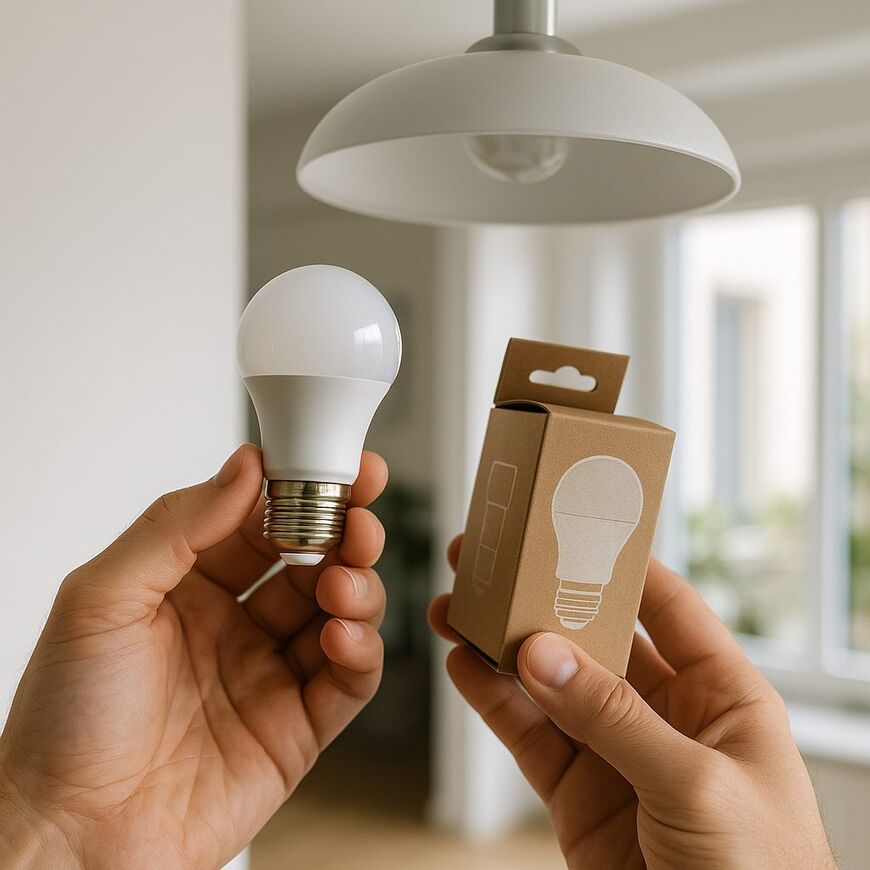
A replacement LED bulb needs to fit the socket and the dimensions of the light fixture, and provide the right kind of light for the room. A bulb that looks similar to the old one may not fit the socket, fit inside the fixture, or work with the wall dimmer.
Start with the base type and dimensions. Compare the markings on the old bulb or fixture with those of the new bulb, and make sure it will fit without sticking out or rubbing against the cover. Then choose the brightness by lumens—the unit that measures how much light a bulb produces—and the light color by kelvins, which indicate whether the light looks warm and yellowish or cool and bluish. Wattage describes electricity consumption, not brightness.
This guide explains how to match an LED bulb to a fixture, choose the right light, and understand the markings on the packaging. It also covers how to compare energy use and what to check when the light is connected to a dimmer.
How to make sure the bulb fits the socket and fixture
Before choosing the brightness, make sure the bulb can connect to the socket and fit inside the fixture. The socket is the part into which the bulb is screwed or connected. The code on the bulb, such as E27 or E14, identifies its base type. These are two common screw-base types, but others are available, so match the code on the bulb to the socket.
- Find the code: Look for a marking on the old bulb or fixture, or check the fixture’s instructions. Compare the code you find with the one on the new bulb’s packaging. A similar appearance alone does not guarantee a match.
- Check the dimensions: Compare the bulb’s length and width with the available space inside the fixture. If the fixture specifications list maximum bulb dimensions, use them. This is especially important when the fixture has a cover or a narrow opening. If specifications are unavailable, check the available space directly where possible, and make sure the bulb will not stick out or rub against the cover.
- Check the base and bulb shape separately: In a small or unusually shaped fixture, a compatible base does not guarantee that the entire bulb will fit. Check both the base code and the bulb’s dimensions.
A common mistake is choosing a bulb with the same base as the old one without checking its length and width. It may screw into the socket but still be too large for the fixture. If the markings are unclear, consult the fixture’s instructions or compare the old bulb’s details with the product specifications. When shopping online, rely on the dimensions listed in the specifications, not just the photo, which may not accurately convey the bulb’s size.
Lumens measure how much light a bulb produces; watts measure how much electricity it uses
Bulb packaging lists two specifications that are easy to confuse: lumens and watts. Lumens indicate how much light a bulb produces, while watts indicate its electricity consumption. This means an LED bulb can use less electricity while producing a similar amount of light to a higher-wattage bulb.
To compare bulbs, start with the light output: compare bulbs with similar lumen ratings, then check which one uses fewer watts. The product page for the FSL T26 E14 3W Daylight White LED Bulb for Refrigerators and Decorative Lights lists its wattage and light color. The 3W rating indicates electricity consumption. To compare its light output with another bulb, check whether the product page also lists its lumen rating.
The same wattage does not guarantee the same brightness, especially when comparing different types of bulbs. If you are familiar with incandescent bulbs, the following figures can serve as a general reference for their light output. They are not an exact conversion for LED bulbs:
- 40 watts: approximately 450 lumens.
- 60 watts: approximately 800 lumens.
- 75 watts: approximately 1,100 lumens.
- 100 watts: approximately 1,600 lumens.
These figures give you a general idea of the light output of a familiar incandescent bulb, but they do not tell you which bulb is right for a particular room. The best choice depends on how the space is used, how many fixtures it has, and how they distribute light. If you are replacing a bulb whose brightness you like, its lumen rating can help you find a suitable replacement. When comparing LED models, use the lumen rating shown on the packaging or product page.
Kelvins describe the color of the light
The Kelvin value indicates how the light looks, not how bright it is. Lower values tend to produce a warm, yellowish tone, while higher values produce a cooler, whiter or bluer light. Even when two bulbs produce a similar amount of light, their color can change the feel of a room.
Packaging may use descriptions such as “warm light,” “white,” or “daylight.” These give you a general idea of the color, while the Kelvin value, if provided, allows for a more precise comparison. For example, the FSL T26 E14 3W Daylight White LED Bulb for Refrigerators and Decorative Lights is described as producing white daylight. This description refers to the color of the light, not how much light the bulb produces.
Choosing a light color depends on your preference and the atmosphere you want to create. Some people prefer warm light in a bedroom or living room, while others prefer a clearer, whiter tone in those spaces. There is no single Kelvin value that suits every kitchen, either. When comparing models, check the color description and Kelvin rating rather than relying on the photo alone, which may not accurately represent how the light will look in your room.
When comparing bulbs, consider these two specifications separately: lumens help you assess how much light a bulb produces, while kelvins describe its color. This makes it easier to choose a bulb that provides the desired amount of light in a tone that suits the space.
Have a dimmer? Make sure the bulb is compatible
A dimmer lets you adjust the brightness, but not every LED bulb is compatible with every dimmer. If the fixture is connected to a dimmer, make sure the bulb is dimmable and compatible with the model you have installed.
Before buying, check the following:
- Whether the packaging or product page states that the bulb is dimmable.
- Whether compatibility information is available for your existing dimmer, or whether the manufacturer provides guidance. The words “dimmable” do not guarantee that the bulb will work properly with every dimmer.
- If the information is unclear, confirm compatibility before buying rather than assuming the bulb will work with your existing switch.
Compatibility is especially important when replacing a bulb in a fixture that is already connected to a dimmer. If you do not have a dimmer, you can focus on the other specifications that matter for your choice. Not sure which dimmer is installed? Check its markings or consult the information provided by the bulb and dimmer manufacturers. A matching bulb base alone does not mean the bulb will work with the dimmer.
How to compare energy consumption on the energy label
An energy label can help you compare bulbs’ electricity consumption, but the information and the way it is presented may differ from one label to another. On the European energy label for light bulbs, energy consumption is shown in kWh per 1,000 hours of use. This figure is intended for comparing products, not for predicting your household electricity bill: actual consumption depends on how long the bulb is switched on.
The European label also includes an energy rating on a scale from A to G. Do not assume that this scale or its format will appear in the same way on every label you encounter in Israel. For a local label, check which details are actually shown and read them according to the units and explanations provided. If a rating is shown, use the scale printed on that label rather than assuming it is the same as the European scale.
- Energy consumption: Check the figure and unit shown on the label. On the European label for light bulbs, this figure is given in kWh per 1,000 hours; actual household consumption depends on usage.
- Energy rating: Read the rating according to the scale shown on the label. The A-to-G scale is part of the European label and should not be assumed to apply to every local label.
- Model details: If the label includes a scan code or a link to more information, check that it refers to the model you are considering. Not every label includes one.
When comparing bulbs that produce a similar amount of light, energy consumption can help you distinguish between them. Make sure you are comparing the same type of information using similar units, and that the details apply to the models you are considering. If the information on the packaging differs from what appears on the product page, confirm that both refer to the same model.
Five checks to make before ordering a bulb
Before placing your order, review the specifications on the product page or packaging. If a detail is missing or unclear, do not assume it is the same as on your old bulb; look up the model specifications or ask the seller for clarification.
- Base and dimensions: Match the base code to the socket, and check that the bulb fits the available space in the fixture or stays within the maximum dimensions listed in its specifications.
- Light output: Check the lumen rating and choose an output suited to how the space is used.
- Light color: Check the color description and Kelvin value, if provided.
- Energy consumption: Compare bulbs with similar light output and check which one uses less electricity.
- Dimmer: If the fixture is connected to a dimmer, make sure the bulb is dimmable and compatible with the dimmer you have.
Low energy consumption does not guarantee that a bulb is suitable: it may produce less light than you need or fail to fit inside the fixture. First match the base and dimensions, then check the light output, color, energy consumption, and dimmer compatibility as needed.


